






TENNIS HALL OF FAMER WEIGHS IN ON YOUNG GUNS, THE VENUS-SERENA LEGACY, AND THE EVER-CHANGING WOMEN’S GAME
By Richard Osborn
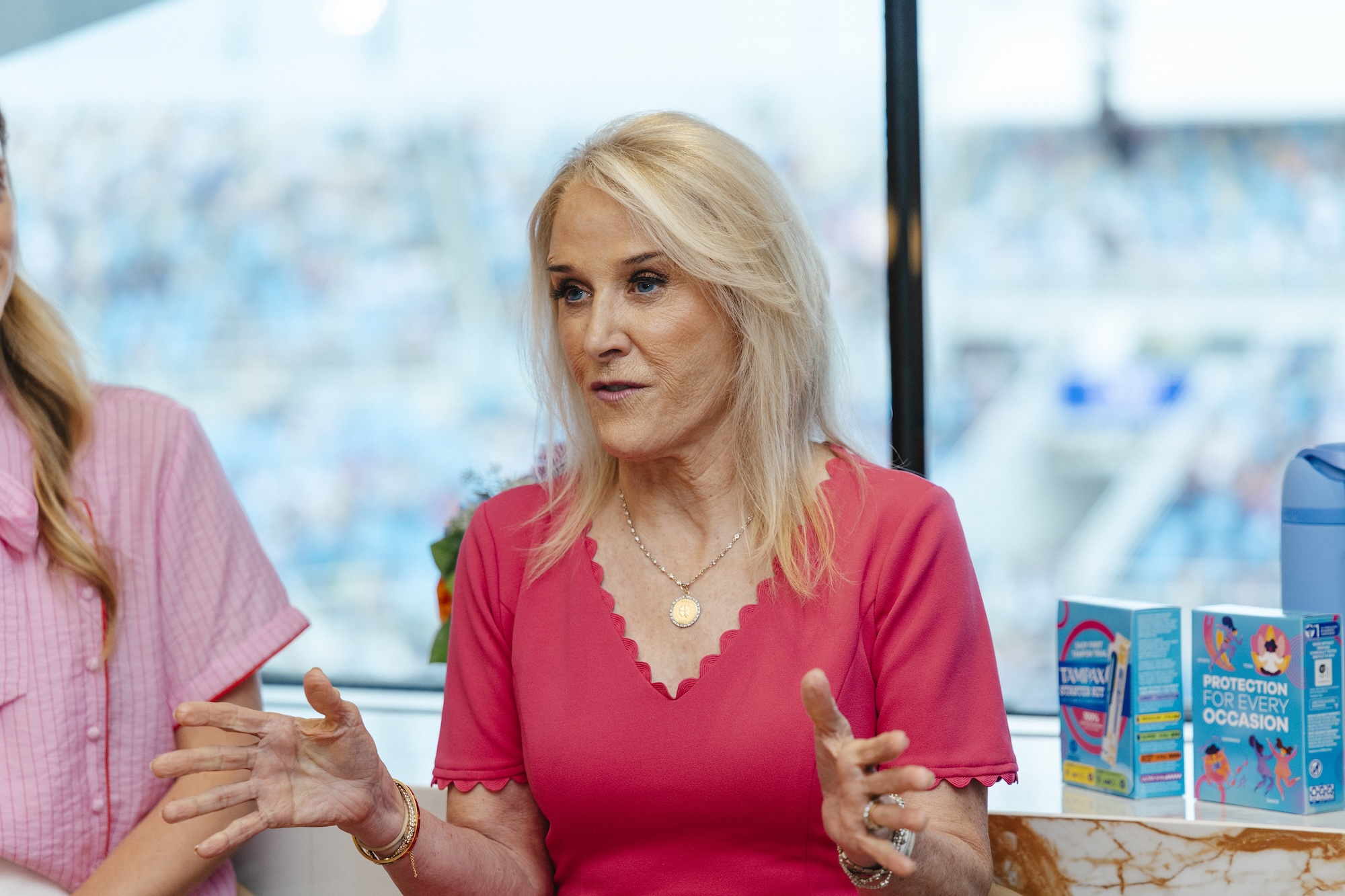
CincinnatiOpen.com caught up with International Tennis Hall of Famer Tracy Austin, the two-time US Open champion and former No. 1 who since her playing days has become one of the most insightful voices in the broadcast booth. An interview:
Whether it’s Iva Jovic or Victoria Mboko, Joao Fonseca or Rafael Jodar, there’s a youth movement afoot on both tours. Last night, we saw a 20-year-old up-and-comer in Sara Bejlek take out the world No. 1 here in Cincinnati. You, of course, played in an era when there were regularly teen breakthroughs, but we kind of got away from that for a while. Now it feels like we’re back to that.
If you’re a phenom, if you have special qualities, I think you break in young. There are certain things that are important in tennis: It’s the mind, coping with your emotions. It’s weapons, it’s your movement, your ability to adapt in a match. There are so many things that you need to be able to do. The young ones just get it that much faster. With some people, the talent just shows through early.
Jovic might be the perfect example of all those qualities. What poise, what on- and off-court smarts for an 18-year-old.
She’s got a great family. Her mother and father are both pharmacists. Her sister is going to UCLA right now. It’s just a very solid family. You can tell when people have a good family around them.
I think it’s the same thing with Coco Gauff. She’s got such a good head on her shoulders, strong family support.
Good foundation. They’ve done a great job with her. She seems to be almost impervious to all that comes at her, which is a lot. She manages the serve questions, forehand questions, and goes about her business, recognizes that she has a long career ahead of her. She’s only 22 and she’s won two majors already. She’s got a good outlook. I think that her parents have given her that good value.
But this pack of young players is especially exciting.
Alex Eala, too. She’s bringing in a whole new nation that wasn’t necessarily interested in tennis. Of course, there were already tennis fans in the Philippines, but from when I was in Toronto, there were people in the community who had never watched a tennis match. That’s bringing a whole new fan base to our game, which is terrific. In Toronto, they had to push her match to the main court because there were apparently 5,000 people that bought tickets just to see her. They weren’t going to fit. It’s just Eala-mania. It’s crazy. We want more fans. It’s great, more international. She seems to be very poised, as well.
On the other end of the spectrum, we have Venus and Serena Williams at 46 and 44, respectively, out there packing the Grandstand for doubles. What does it say to you that these two champions are still playing? They don’t need to prove anything. They sure don’t need the money.
It’s an obsession, tennis. ‘Obsession’ is a negative word. It’s joy. They just really love to play. I think as an athlete, you love being challenged. We’re used to, since we were 5 years old, 7 years old, getting up every day and having goals. “What am I going to work on today? I’m going to get better at this. I’m moving forward. What’s next?” You just get used to that. They obviously still love the process. Does Serena get that one wildcard left at the US Open? We’ll see. I think it just shows the love of the game. What a great sport we have.
At the end of the day, tennis is about striking a ball over the net again and again. They grew up in Compton hitting balls out of a shopping basket with their dad, and they’re still at it decades later. That’s joy.
In order to get to where they got to, which is No. 1 in the world, you like the challenge: “I can hit it deeper. I can hit it better. I can beat the person that I didn’t beat last time.” It’s just all these little challenges that you enjoy, pushing yourself. Not a lot of people enjoy going out and just hitting forehand cross-courts, buckets of balls, for hours and hours. I loved that. I loved trying to hit a target. I wanted to hit three out of 10, then I four out of 10. I always enjoyed that challenge. Then you enjoy putting yourself on the line and trying to come through. I think it just kind of gets in your DNA. Serena said it before coming back at Wimbledon, something to the effect that this was the best thing that she’d done in her life. Then you go on and you’re a mother, and there’s no measurement. Tennis is a measurement. You either win or lose, and it’s very defining, it’s very challenging.
It makes me think of Novak Djokovic, in so many minds already the GOAT. He doesn’t need to prove anything, doesn’t need the money. But I think champions, when they step away, they aren’t quite sure what the next step is, because they’ve been doing this one thing for so many years.
Maybe he thinks he can get his 25th. Does he need it? No. He doesn’t need it, but maybe that’s what drives him. Last year, he got to the semis of all four majors, and he’s still playing meaningful matches, like against Felix Auger-Aliassime this year at Wimbledon. It was 7-6 in the fifth set, and they finished six minutes before 11 o’clock. I mean, where in normal life do you get that adrenaline rush? I don’t know, what’s a better word besides ‘addiction’? There’s no other challenge in real life like it. You’re at Wimbledon, you’re on Centre Court, 15,000 people, and you’re finishing at 10:54 p.m. The crowd’s going wild and you come through in the fifth set, and you’re 39 years old. You’ve won there seven times, and your wife and kids are in the stands. There’s a reason why athletes stick around. Then there’s Ash Barty. She quit at 25. She was No. 1 in the world. But she’d had enough. She knew in her heart that she wanted to go and be a mother and relax. She felt like she did enough. So everybody’s different.
What do you think has changed most in the women’s game since your heyday in the ‘70s and 80s?
It’s just more physical. Everybody’s got a physio. Everybody’s got a trainer. Everybody’s stronger. The strings have changed, players have more spin. Players can get more rotation, hit harder and still control the ball. We oftentimes talk about the rackets, but we don’t talk enough about the strings. The entourage sizes. You’re five, six people strong now.
What’s the hardest part about being a tennis parent, especially when you see your son struggling with an injury? [Austin’s son, former USC standout Brandon Holt, has been sidelined with injury since January.]
Brandon has a bone bruise on his knee, kind of like Jack Draper has on his arm. It’s the most confounding injury I have ever seen. Most injuries, the doctor identifies it and says, “Do X, Y, Z, do surgery, take three weeks off, take 16 weeks off,” whatever it is. “We’re going to do rehab for this long, you’ll be back in X.” This is an unknown quantity. It’s the kind of injury where doctors will say they don’t know the time frame of when it’s going to get better. He hasn’t played since the Australian Open. He’s hopeful to play again, but he’s got to get healthy.
That’s got to be hard for you to watch as both a parent and someone who’s been through a few injuries of your own.
It’s a little PTSD, because I had the same thing, where the injuries were nonstop. It’s hard to watch after he’s put so much time in and had just broken into the Top 100.








Advertising
Popular
-
General
A Tournament to Remember: The 2026 Cincinnati Open by the Numbers
Sep 1, 2026 -
Interviews
Iva Jovic, 17, shares parents’ emigration story and ‘menace’ memories
Aug 10, 2025 -
Interviews
Iva Jovic is a different kind of 18-year-old
Aug 18, 2026 -
Recap
COCO CLAIMS SECOND CINCINNATI CROWN
Aug 23, 2026 -
Interviews
Eala’s incredible journey from Philippines to global stardom
Aug 13, 2026