






TWO-TIME QUARTERFINALIST EYES CINCY BREAKTHROUGH
By Richard Osborn
As the four-episode Netflix docuseries “Rafa” illustrates so plainly, Rafael Nadal dealt with pain throughout his career, the cause a rare degenerative foot condition diagnosed when he was 19. It’s a testament to the Mallorcan’s mettle that he found a way to compartmentalize that pain while amassing 22 Grand Slam singles titles, a record 14 of which came on the demanding red clay of Roland Garros.
“Throughout my career I learned to love suffering,” Nadal confided. “You need to fight, and you need to accept that you are going to suffer.”
Easy for him to say.
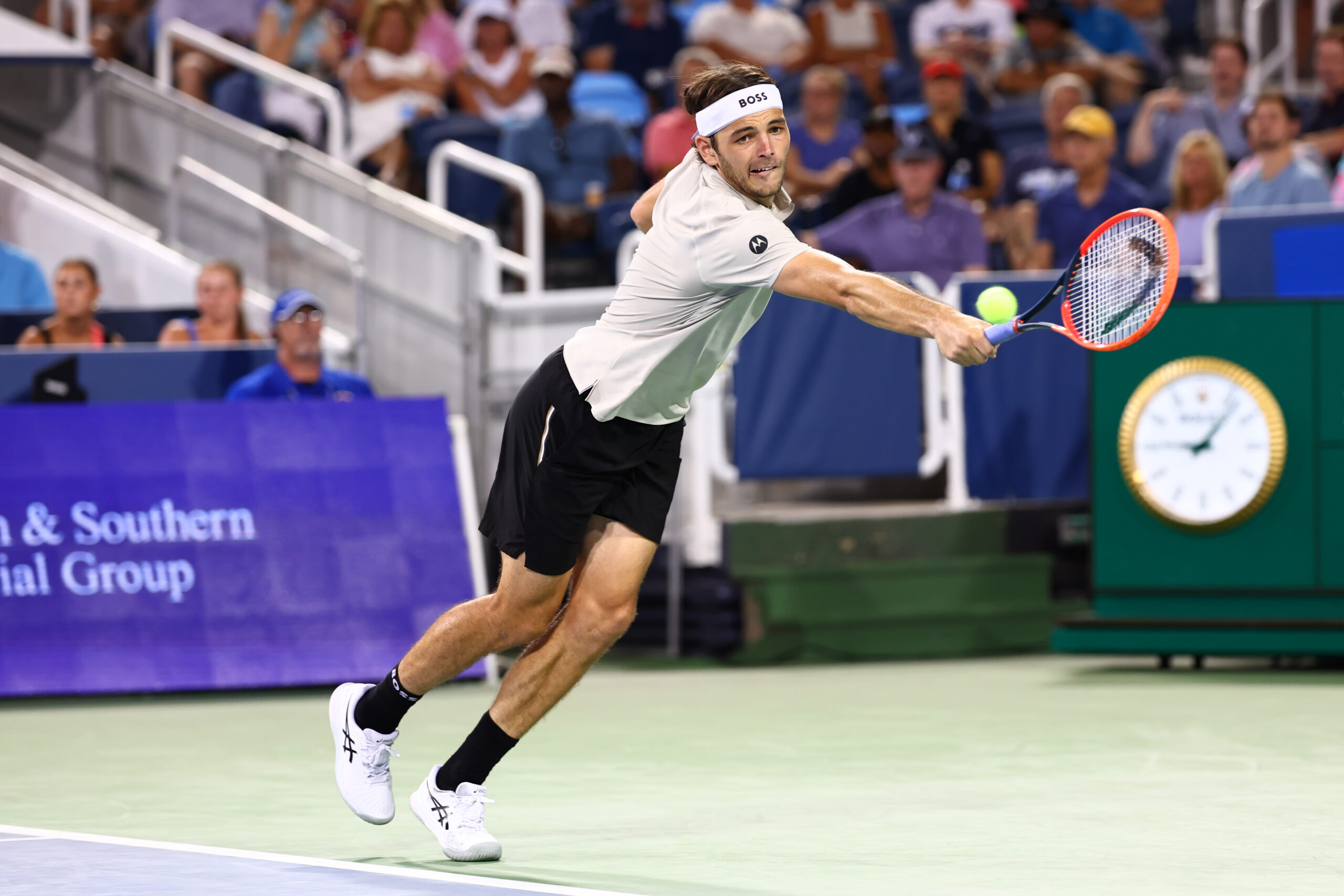
Taylor Fritz has had to embrace some suffering of his own of late. Chronic knee tendinitis sidelined him for the bulk of the 2026 clay campaign, keeping him away from the sport for nearly two months. Even upon his return, the pain never fully subsided. After back-to-back grass-court finals in Stuttgart and Halle, it flared up again at Wimbledon in his quarterfinal defeat against Alexander Zverev, his first loss to the German in their last eight head-to-heads.
But Fritz kept pushing though it, eventually capturing the ATP 500 Washington title (def. Rafael Jodar, 7-6(2), 6-4), his first above ATP 250 level in nearly four years. If not necessarily loving it a la Rafa, he’s grown to accept the suffering. As he told us, rest isn’t necessarily the way to fix what ails him. In his own words, “there’s a certain amount of pain that’s acceptable.”
“To a certain extent, if it’s something that you know won’t really make it worse, and you’re not going to hurt your career by doing it, then why not just try to get through it and do the best you can?” asked Fritz on Tuesday at the Cincinnati Open, where he’s the sixth seed.
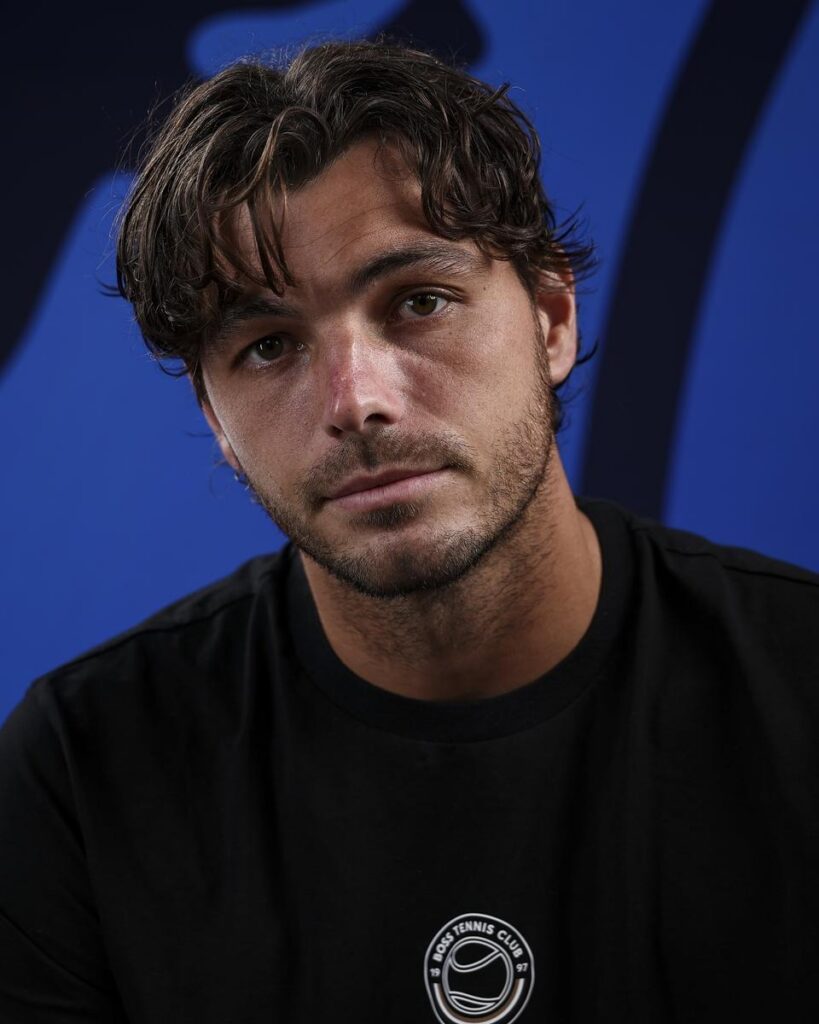
“I hate giving up and quitting. Maybe ‘quitting’ isn’t a good word for it, because it’s probably the smart thing to do if you’re hurt to stop sometimes, but it’s hard for me to not feel like it’s quitting. It’s going to sometimes feel worse than others. That doesn’t necessarily mean that I’m making it worse. It’s just going to be more irritable at times. If I can play through it, I was told it’s not going to make it worse. If I feel like I can push through it, there’s no need to pull out.”
This is an important stretch for Fritz, now a decade into his pro career. Two years ago, he played his way into his first major singles final at the US Open (l. to Jannik Sinner, 6-3, 6-4, 7-5). A strong run at the Lindner Family Tennis Center, where he’s twice reached the quarterfinals (2022, 2023), would set the Southern Californian up nicely for success in Flushing Meadows. The fact that neither Sinner (knee) nor Carlos Alcaraz (wrist) are in the draw certainly creates an enticing opportunity. Is that top of mind for the 28-year-old?
“Maybe once you get to the later stages of the tournament, but that’s not something I’m going to think about until maybe the quarterfinals, because that’s where you’re going to actually see a higher seed. You’re not going to see the difference of them not being there until the quarters or the semis. Up until then, it’s just another tournament. Obviously, there’s opportunity, but it’s opportunity at the end of the tournament.”
Fritz understandably has a bent for the BNP Paribas Open in Indian Wells, Calif., which is all but a backyard tournament for the Rancho Santa Fe native. It was the site of his career breakthrough in 2022, when he shook off a foot injury and outslugged Nadal in the title match, 6-3, 7-6(5). But the Cincinnati Open, the reigning ATP Masters 1000 Tournament of the Year after undergoing a sweeping $260 million overhaul, has clearly made a strong impression upon him, as it has with his tourmates.
“I’m always going to be biased towards Indian Wells, but the facilities here are as good as any other tournament in the world,” he said. “I’d even say as good as some of the Slams. What they’ve done here is incredible. It’s great to see them put a lot towards the tennis. It makes the players a lot happier to be here. I wish a lot of tournaments felt more obligated to renovate and make big improvements like they did here, because what they did was a massive, massive investment back into the tournament.”








Advertising
Popular
-
Interviews
Iva Jovic, 17, shares parents’ emigration story and ‘menace’ memories
Aug 10, 2025 -
Interviews
Iva Jovic is a different kind of 18-year-old
Aug 18, 2026 -
Recap
Top 10 Moments from the 2026 Cincinnati Open
Oct 1, 2026 -
General
A Tournament to Remember: The 2026 Cincinnati Open by the Numbers
Sep 1, 2026 -
Recap
COCO CLAIMS SECOND CINCINNATI CROWN
Aug 23, 2026